
PUBLISHED09 Apr 2026
Reflections on AIDC 2026: Hold True
By Documentary Australia Impact Director Stephanie King
Is public broadcasting in peril? Does it still matter, and if so, why?
This was a central concern of the session, ‘Crossing Channels: Collaborations in Broadcast’, at last month’s Australian International Documentary Conference – and, against the backdrop of broader moves to defund public media internationally, it was a theme that carried across the four days of industry discussions and beyond.
Executive Producer of Public Broadcasting Service’s (PBS) award-winning POV documentary strand Erika Dilday was a beacon of light on this topic, and provided a welcome reminder of the role of public media.
“It absolutely does still matter. The public is owed from national airwaves the information, the ideas, and the diversity of content,” she said.
“It’s a service. We serve the public. The airwaves belong to the public. They shouldn’t be censored or curbed by anyone other than the public. It’s a right.”
Erika went on to explain the foundational work of the Carnegie Commission, which established a funded public television service as an urgent matter in the US public interest.
“A lot of the unrest that was going on in the country in the 60s was because there wasn’t enough opportunity within those outlets for different points of view to be heard, for different people to get their ideas out. The belief was that the more we can circulate ideas from all voices, the more people have the opportunity to hear those, then the better off they’ll be.”
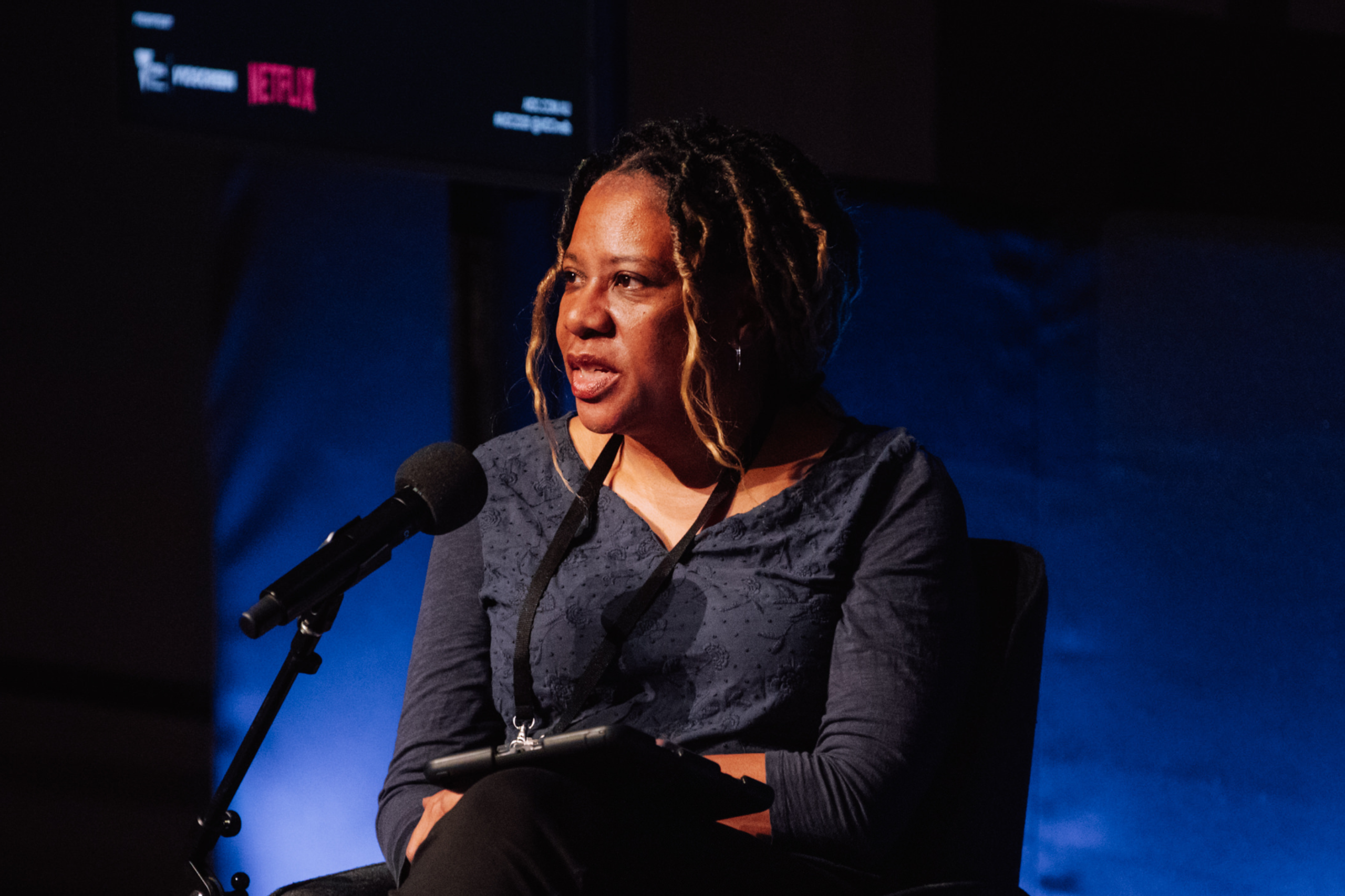
Image: Erika Dilday. Credit: AIDC, William Hamilton-Coates.
The ‘Hold True: Short Films Curated by POV’ screenings program was another highlight of the conference program and the perfect illustration of this sentiment, showcasing award-winning, independent documentaries that featured diverse lived experience perspectives and truly illuminated their participants.
24-minute observational documentary Classroom 4 (2025) took us inside a US prison classroom where college students and incarcerated individuals come together to study the history of crime and punishment in America – sparking unexpected conversations, reckonings with difficult truths, deeper understanding of justice and humanity, and intense transformations for all involved.
It was refreshing to witness this profound and moving story play out unmediated by celebrity presenters or voiceover, which ultimately deepened the project’s authenticity and impact – and for this to be funded by a major public broadcaster.
Our CEO Dr Mitzi Goldman’s session, ‘The Funding Landscape: Festivals, Funds, Philanthropy’, was also excellent and unsurprisingly rated one of the most popular sessions by IF Magazine’s Sean Slatter.
Funders from Points North Institute, Shark Island Foundation, Minderoo Pictures, Adelaide Film Festival and Melbourne International Film Festival all indicated an appetite for bold, impactful storytelling, while sharing insights into what makes a successful funding application.
Kate Lemberg from US-based Points North Institute expressed an interest in projects that are “less talking-heads focused, and more taking risks in what stories are being told and how they are being told,” citing Climate Story Lab Australia-supported project Testimony as a stand-out example of visual storytelling and collaborative process.
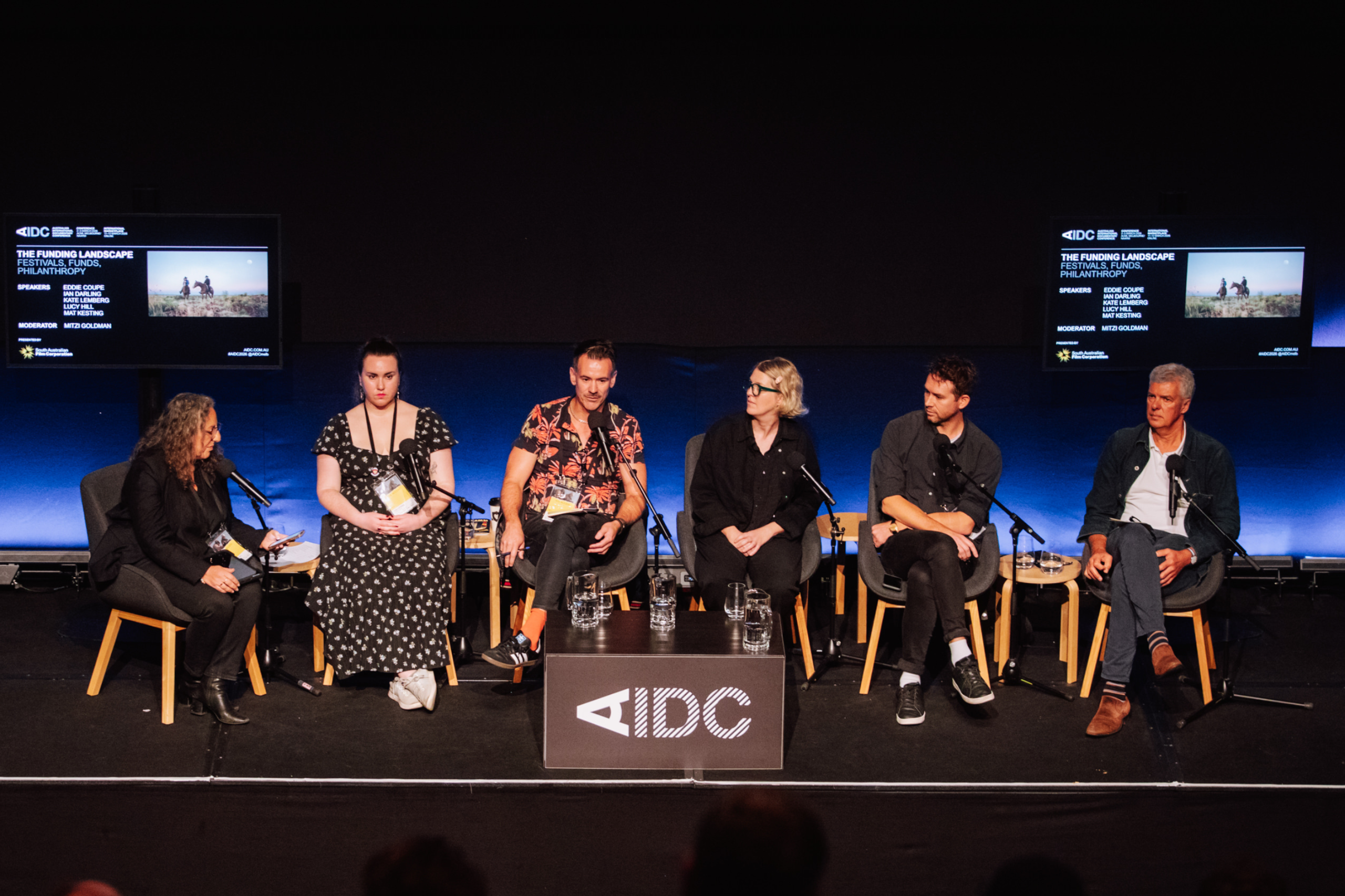
Image: The Funding Landscape session featuring (L-R) Dr Mitzi Goldman, Kate Lemberg, Mat Kesting, Lucy Hill, Eddie Coupe and Ian Darling. Credit: AIDC, William Hamilton-Coates.
I had the pleasure of moderating two sessions, including, ‘Intolerable Beauty: Innovating Climate Storytelling’, with environmental filmmakers Genevieve Grieves (Power to Country), Yaara Bou Melhem (Yurlu | Country) and Jordan Giusti (Floodland), produced by Alice McShane.
We delved into the craft behind these world class Australian documentaries, their approaches to creating ‘devastating beauty’ that demands audiences don’t look away from environmental and human rights crises, and the impact these films are having locally and internationally.
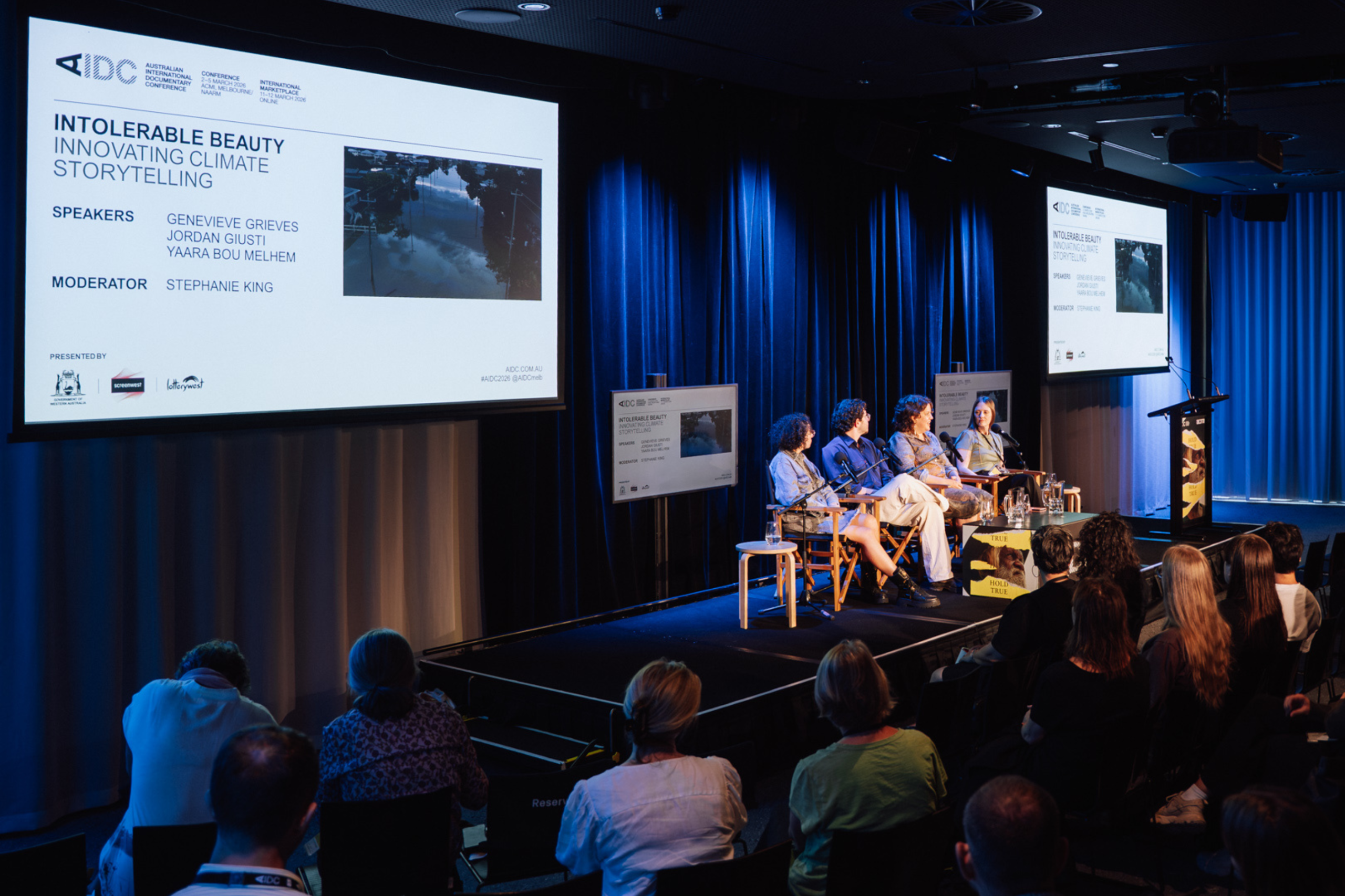
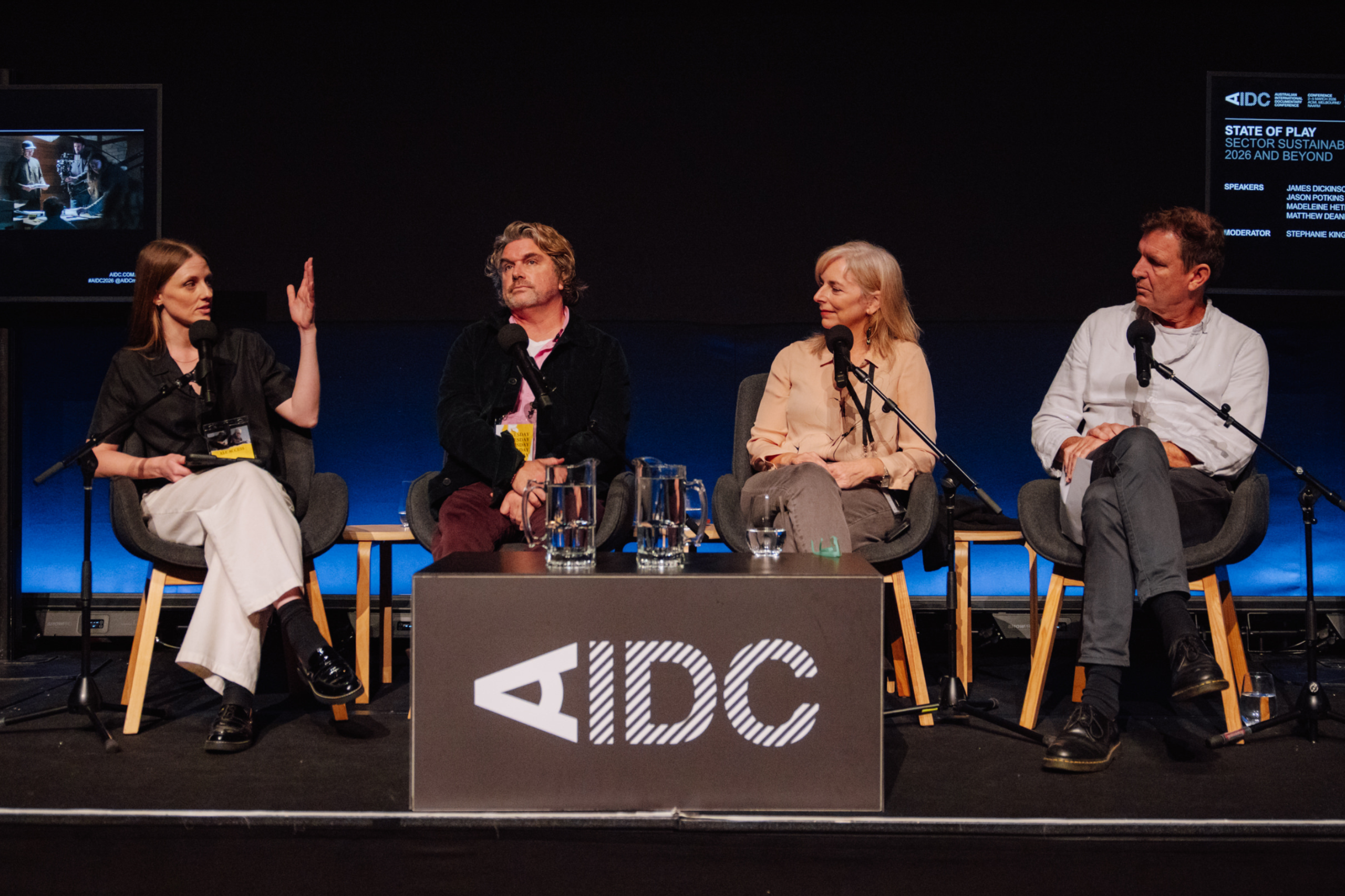
Image (L): Intolerable Beauty session. Credit: AIDC, Max Roux.
Image (R): State of Play session featuring (L-R) Stephanie King, Matthew Deaner, Madeleine Hetherton-Maiu and James Dickinson. Credit: AIDC, William Hamilton-Coates.
I also moderated a panel of industry experts in our third annual sector analysis session, ‘State of Play: Sector Sustainability in 2026 and Beyond’, with Jason Potkins from the Office for the Arts, Screenrights’ James Dickinson, Media Stockade’s Madeleine Hetherton-Miau, and Screen Producers Australia’s Matthew Deaner.
We took stock of the pressures on documentary and the priorities for advocacy and policy reform – discussing the levers of government, changing market forces, and impacts of technology on the foundations of documentary.
This year we utilised a Mentimeter live poll to gather sentiments from filmmakers in the audience about the state of documentary, which was sobering for everyone in the room.
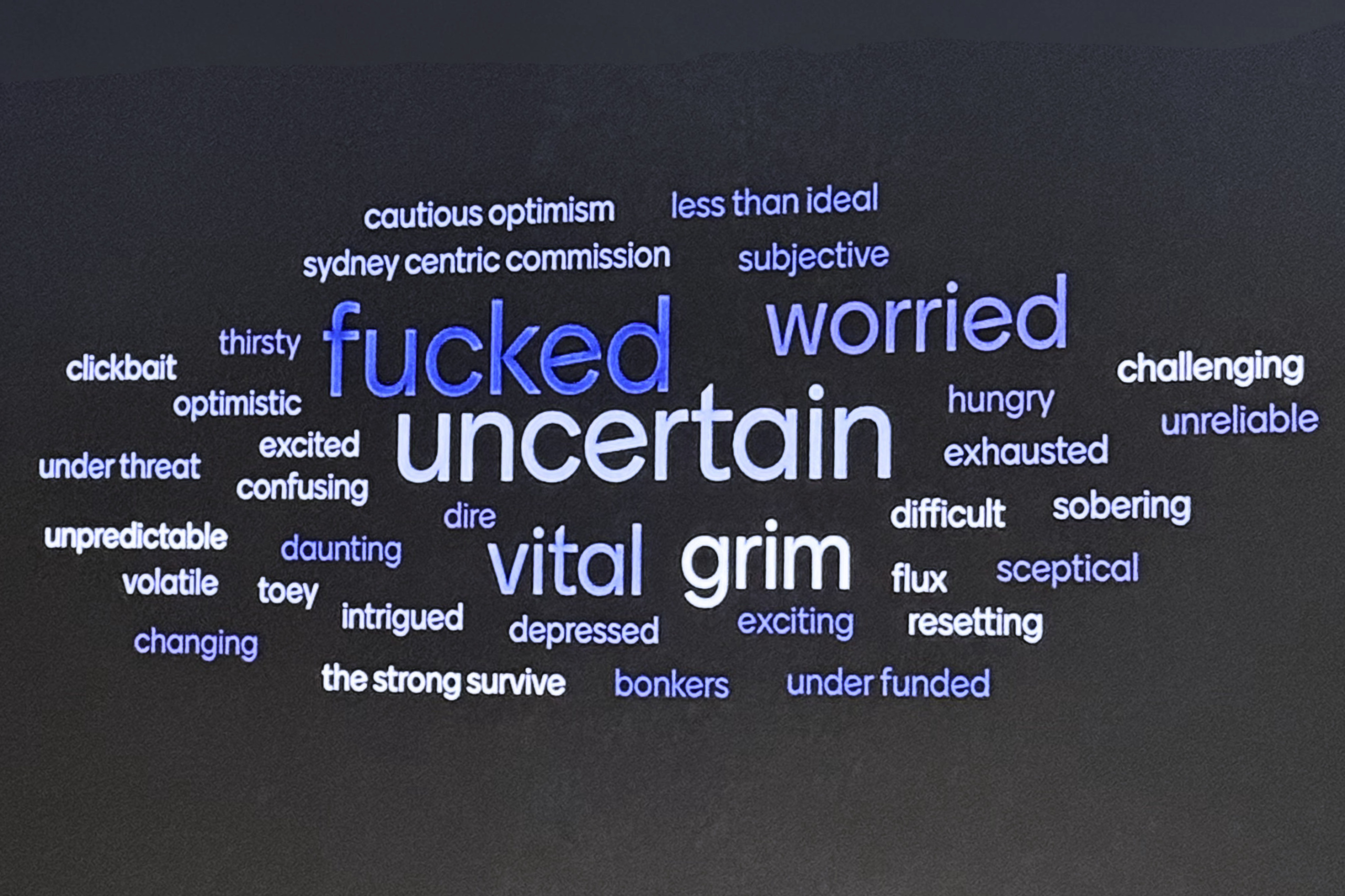
Image: Filmmakers responded to the question ‘How do you feel about the current state of play for documentary?’ Credit: Kate Vinen.
55 participants ranked a range of issues by their level of concern, with screen agency funding emerging as the top concern, followed by streamer commissions, broadcast commissions, AI, streaming content quotas, fair deal terms, intellectual property, international treaties and co-production, tax and offset reform, US tariffs, and lastly, changes to the Copyright Act.
The talent in The FACTory pitching forum was exceptional this year, and it is always wonderful to meet emerging and established filmmakers alike through the Cut to the Chase marketplace, and to hear about their incredibly diverse and powerful projects. May they all find a champion of authentic, independent storytelling that deserves a national audience, like PBS.
Congratulations to all the award winners, including the four projects awarded development grants and support in the Shark Island Foundation Feature Docs Pitch, and Environmental Accelerator-supported film, Yurlu | Country, which took out Best Feature Documentary. A big congratulations to Yaara Bou Melhem, Maitland Parker, Banjima Traditional Owners and Impact Producer Program Alumni Matisse Walkden-Brown for their tireless work on the film and impact campaign for justice, restoration and accountability for Banjima people and Country.
And finally, a huge thank you and congratulations to the AIDC organising team, session producers, guest speakers and of course, documentary filmmakers, who all make AIDC so special, and so valuable to our sector.
It is no secret that in the current funding climate in Victoria, AIDC is currently exploring new partnerships to secure its home base and usher in the next era. I urge the sector to rally behind AIDC to support the team to continue to hold true, and ensure the 40th anniversary edition next year can be as bold and transformative as ever.
Leading Lights
Documentary Australia is proud to have supported Leading Lights again in 2026, funding two spots in the program for emerging and diverse practitioners to attend AIDC for the first time. The program provides assistance to industry newcomers in establishing themselves as part of Australia’s documentary, factual and nonfiction practitioner community.
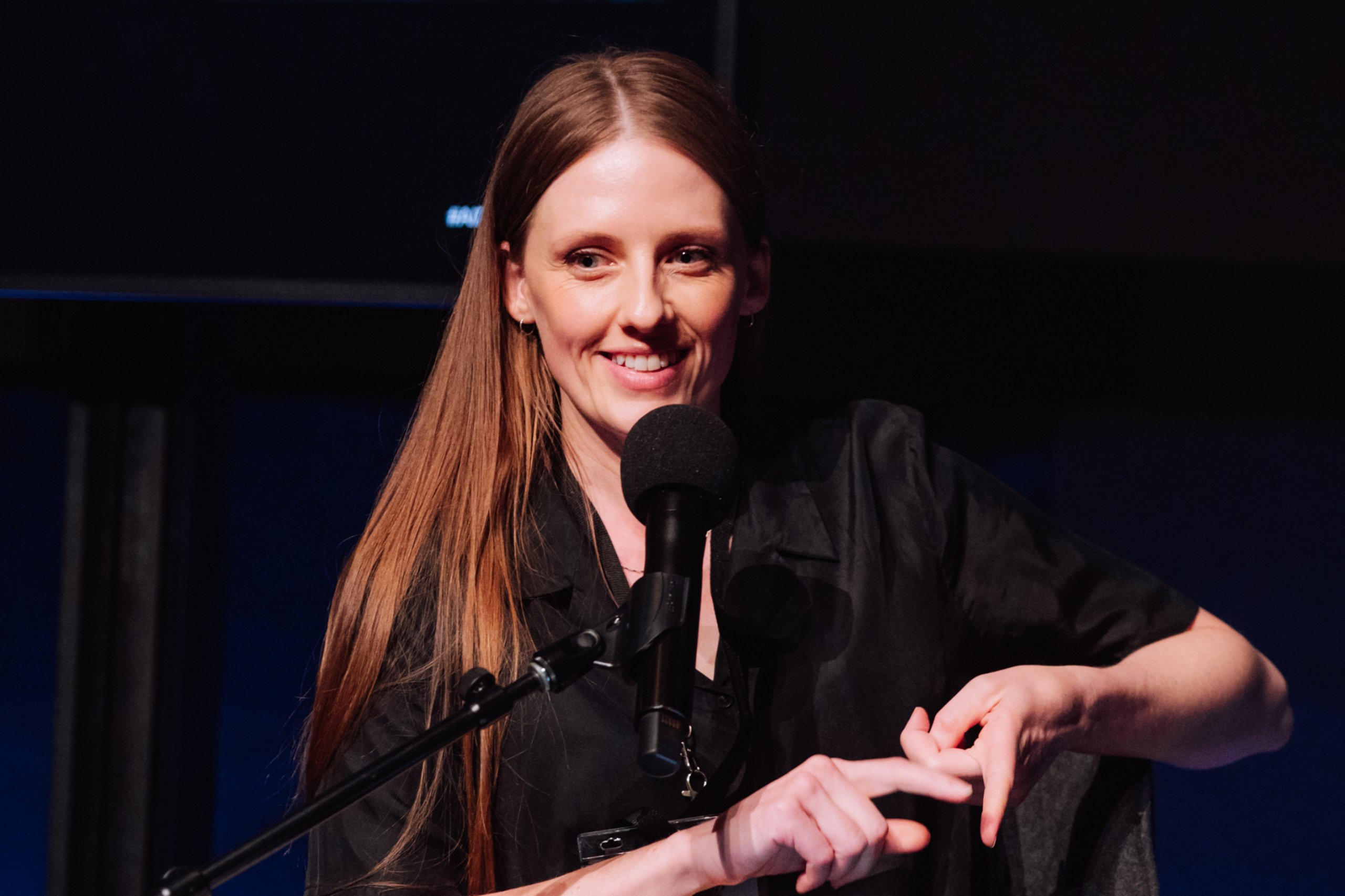
Feature image: Stephanie King. Credit: AIDC, William Hamilton-Coates.