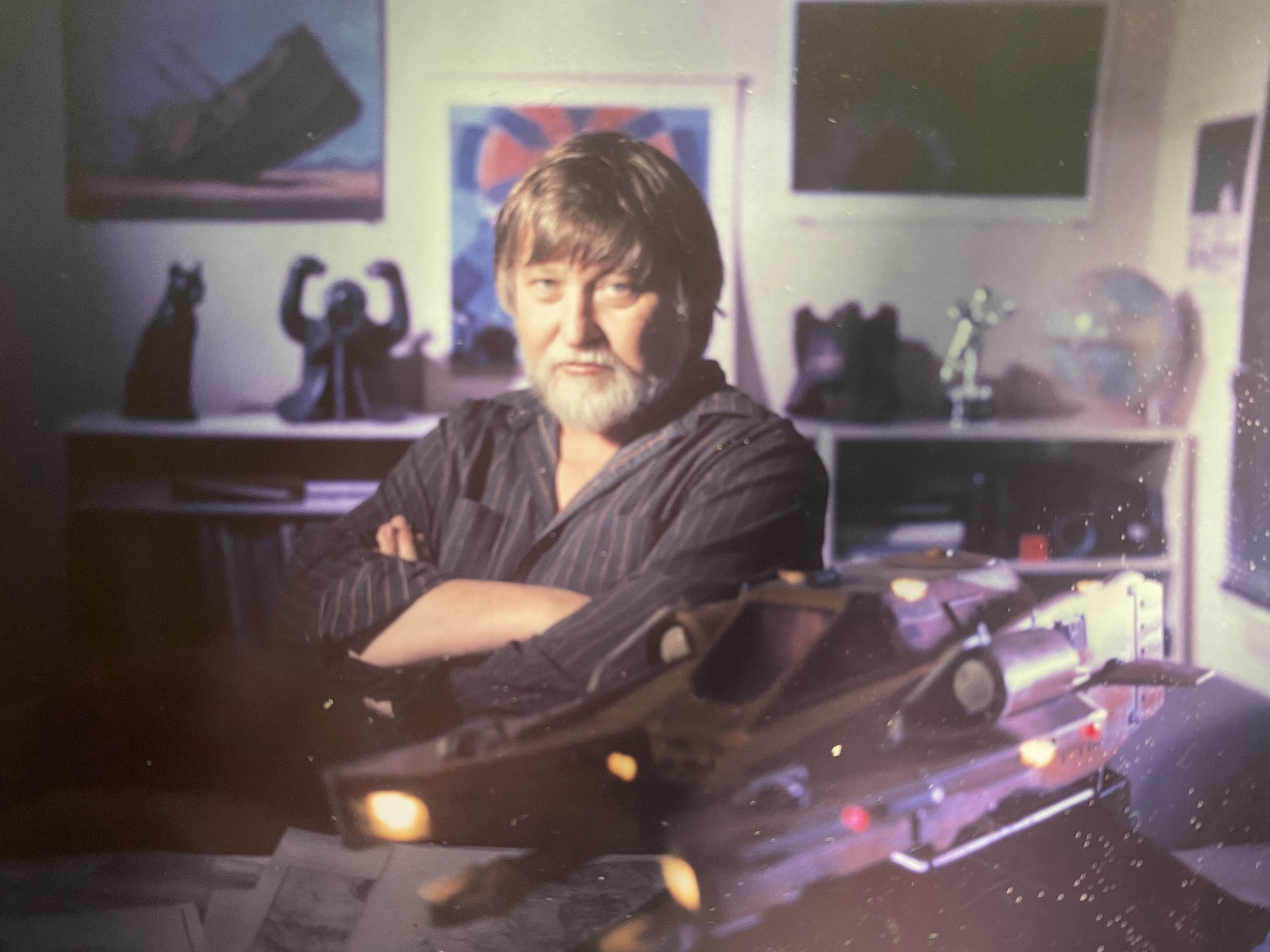
Step inside the mind of Ron Cobb, a radical political cartoonist turned visionary concept artist whose ideas helped shape the counter culture of the late 1960s and the visual language of modern day science fiction cinema.
Forged by the Vietnam War and a deep distrust of broken political systems, Cobb channelled his disillusionment into fiercely intelligent political cartoons that became symbolic of the era. Published widely in underground and alternative presses, his work critiqued militarism, environmental destruction, corporate power, technology and social inequality.
Cobb travelled to Australia in the early 1970’s to support the growing counter-culture movement, where he met and fell in love with his Australian wife, Robin. This period marked an expansion of his political lens, as he produced cartoons that confronted Australian issues head on, particularly the ongoing mistreatment and dispossession of First Nations people revealing colonial injustice with moral clarity and bite. Cobb’s cartoons were not passive commentary, they were acts of resistance. For Cobb, art was activism; a way to expose systems of power and imagine alternatives.
When Hollywood beckoned, Cobb carried this counter-cultural sensibility into science fiction films as a concept artist. From the industrial realism of ‘Alien’ to the engineered depths of ‘The Abyss’ and the instantly recognisable DeLorean time-travelling machine in ‘Back to the Future’, his designs rejected fantasy in favour of credibility, consequence and social context. These were futures shaped by politics, labour, ecology and human cost; speculative worlds rooted in real-world truths.
Blending art and engineering, Cobb helped transform the science fiction genre into a vehicle for social commentary. His legacy endures not just in iconic films, but in the idea that imagination can challenge power and that the future is always political. Strap in… this is the future, as imagined by Ron Cobb