On 4th January 2020, when the mercury hit 48.9c, Penrith was officially the hottest place on Earth. For the 224,483 residents in the local government area, cool coastal relief was a gruelling 70kms of toll roads ($19.29) away. Many hit by the cost-of-living crisis couldn’t even afford to turn on their air conditioning.
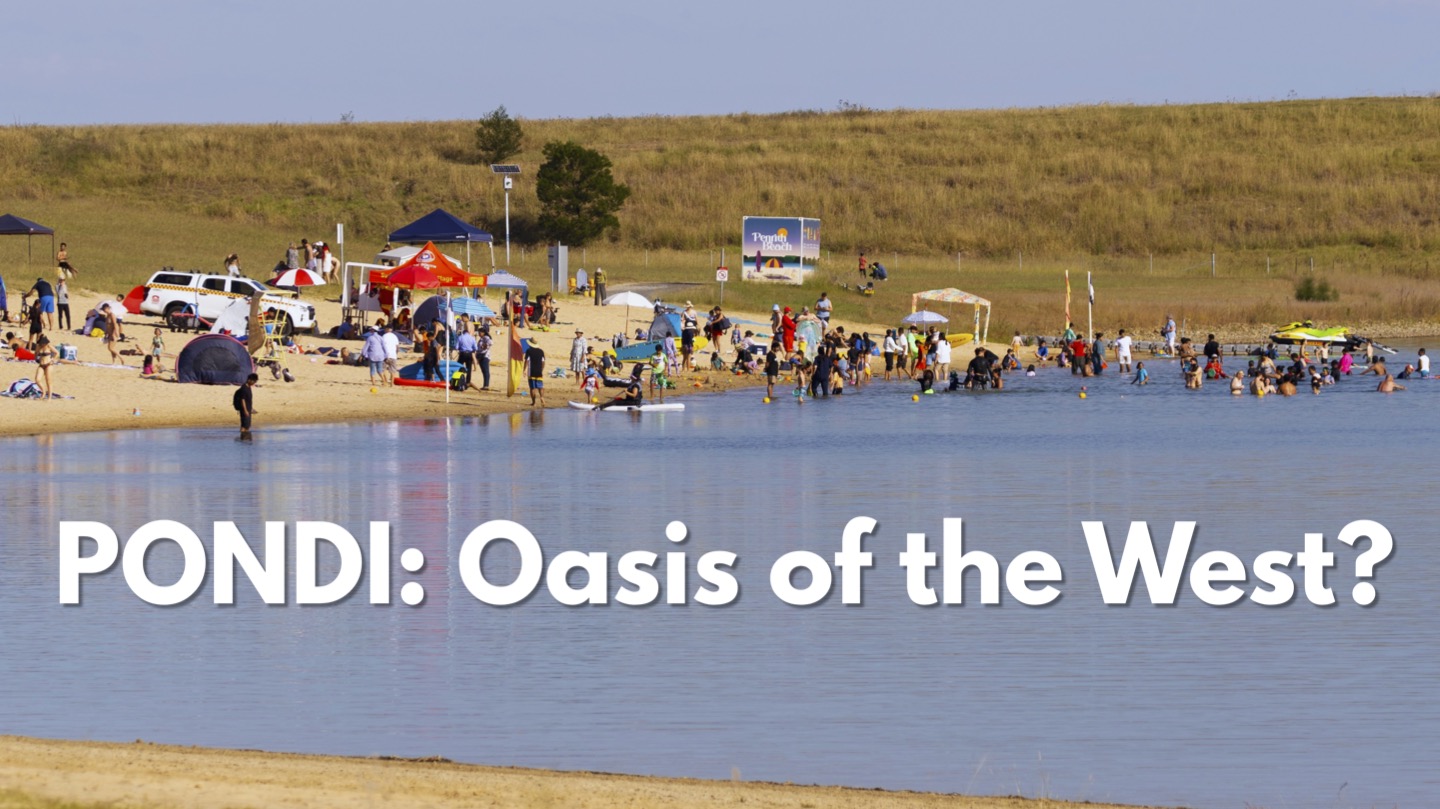
Governments and local leaders have been scrambling to address the existential threat that increasingly hot summers pose to Western Sydney. Enter the very-inland Penrith Beach, affectionately dubbed ‘Pondi’ by locals; a human-made swimming spot in a remediated quarry on Dharug Country, which premiered to the public in December 2023. Sand was trucked in to create the 35-metre wide beach which is approximately as long as Bondi and for locals it cuts the commute for a swim from 2 hours to 10 minutes.
Despite widespread negative commentary about the lack of shade (there are no trees) and questionable amenities (portaloos, demountable kiosks), more than 200,000 people of all colours and faiths have flocked over the last two summers. Official water safety notices appear in Arabic, Filipino, Hindi, Punjabi and Chinese. This summer, popularity has continued to surge, with an inaugural beach volleyball competition, dragon boat racing, junior life savers and a Sandy Cinema attracting hordes of revellers. It has even attracted curiosity from as far away as The New York Times.
But will Pondi get a third season? Questions around whether the swimming site will reopen in 2025/26 hinge on negotiations between state government, which has contributed $2.5 million each summer, and Western Sydney Lakes, the private owners of the land. Local Leader, Adam Leto, has declared that: “Access to water is the birthright of every Australian, and western Sydney residents are no different.”
Alongside the vibrant multicultural life of this curious inland beach, this film will follow its fight for survival, and the battle for liveability in the densely-populated west.