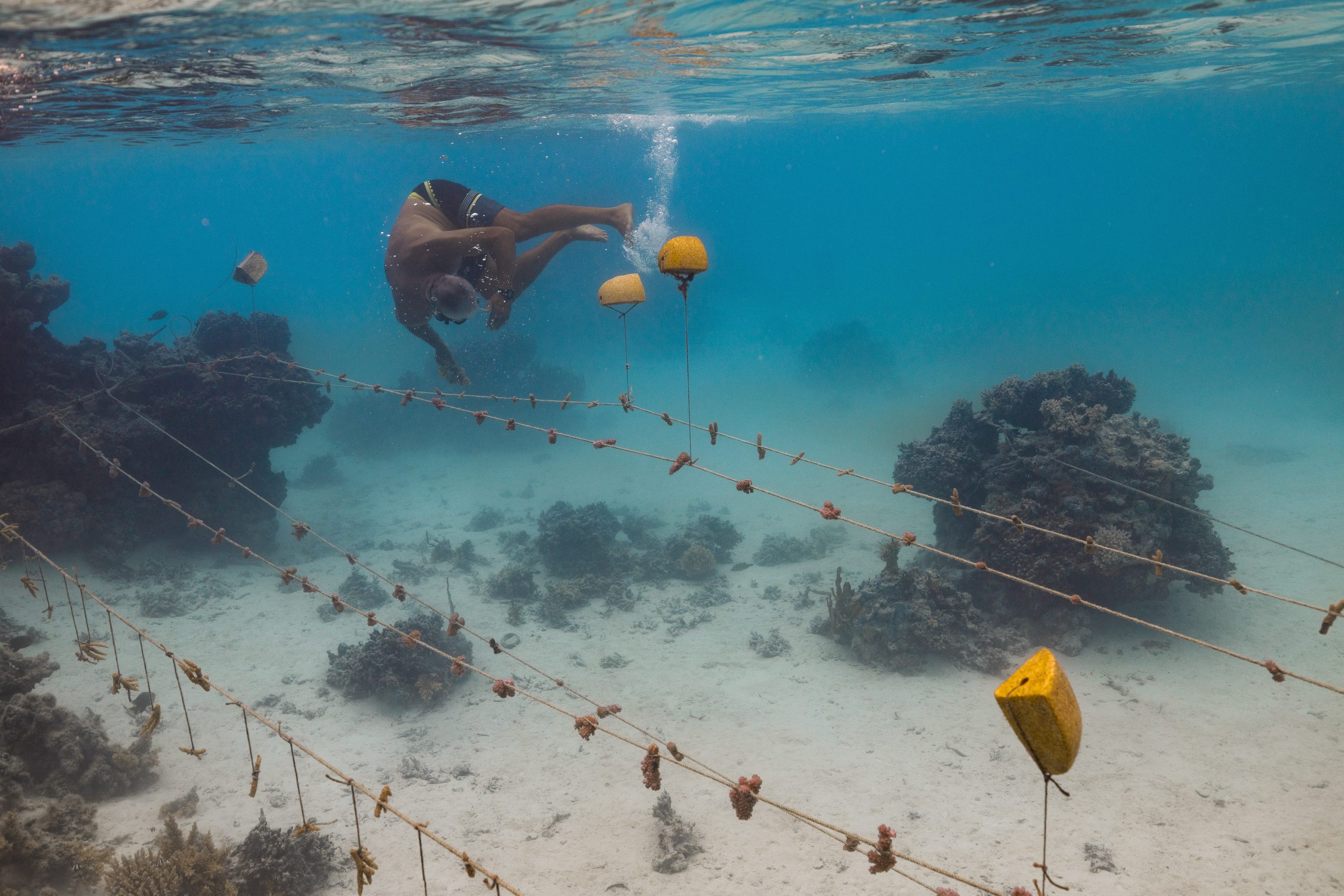
In the Aitutaki lagoon, Mike Lee works alone with salvaged rope and patience, tending a small coral garden that carries enormous weight. The self-taught coral gardener knows one man cannot protect an entire lagoon. He needs more hands, younger hands. But when he looks to the next generation, he discovers something heartbreaking: the children of Aitutaki can no longer swim in the waters their ancestors navigated instinctively. A cultural practice has been lost in a single generation
Through local educators Colette and Linda, Mike connects with a group of young teens, including Princess Davey, 12, who carries quiet authority from her lineage of fishermen and village leaders. She knows the lagoon from shore, through dance, language, and weaving, but not from within. To help Mike with coral restoration, the children must first learn to swim.
They travel to Australia, where pools become their training ground. Like reclaiming their Māori language, they learn quickly, pride returning with each stroke. But Mike knows that learning to swim in pools is only the beginning; becoming true coral carers requires something deeper.
Back in Aitutaki, the children join Mike in the lagoon. They hammer coral fragments onto dead heads, carry structures, and collect broken reef. They are courageous and enthusiastic. But they are also children, and much of the work remains a joyful game. Mike welcomes their extra hands, but the question lingers: can they develop not just the skills, but the sense of responsibility that transforms conservation work from activity into calling?