Incidents of shark attacks continue to dominate news feeds, fuelling polarised public debate. Behind the headlines, personal narratives harden into certainty and the space for nuance disappears.
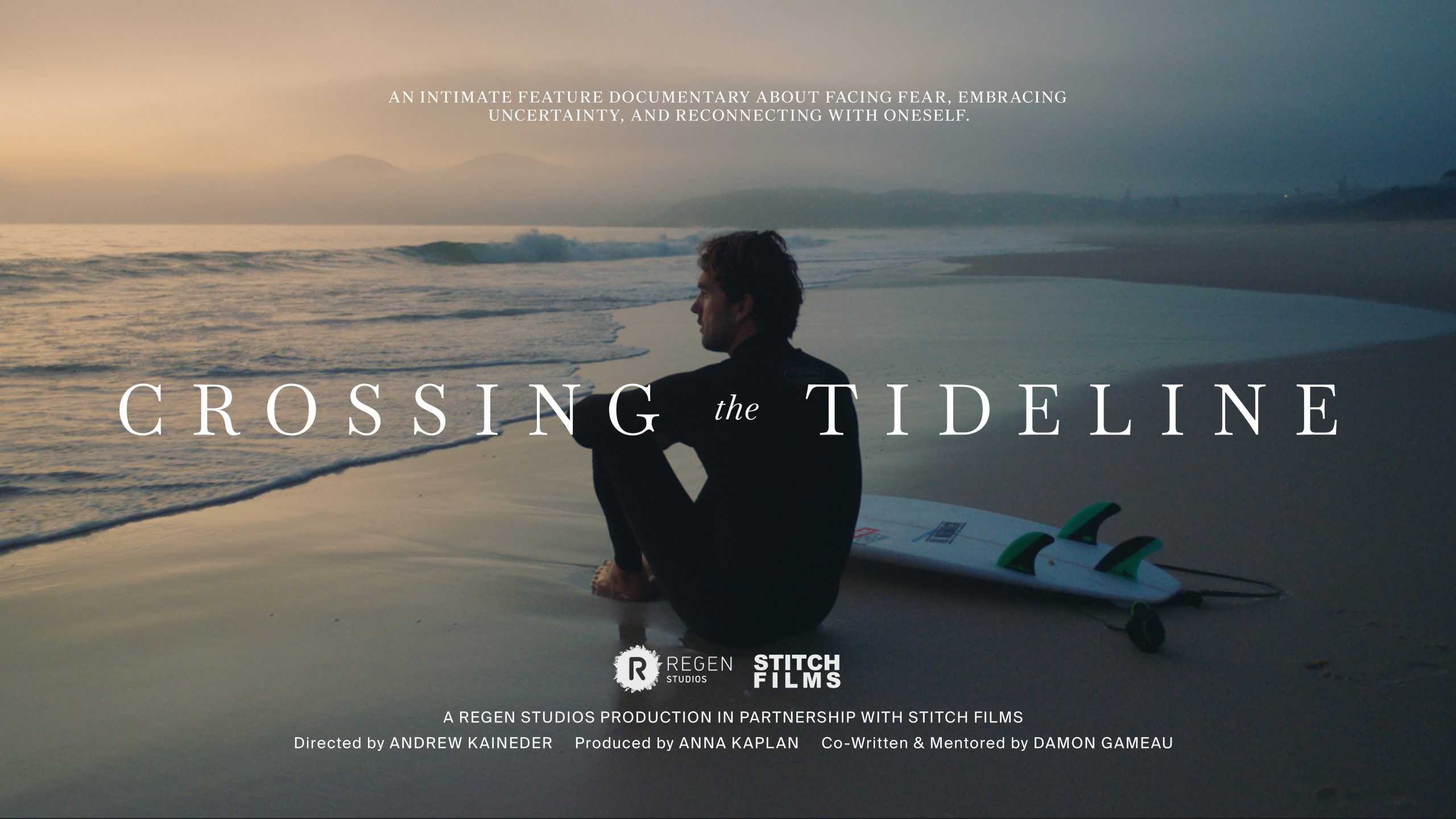
Crossing the Tideline unfolds in the aftermath of one such incident. After surviving a Great White Shark attack, captured on a drone, lifelong surfer Brett Burcher is left disoriented and uncertain, struggling to return to a life that once felt instinctive and familiar. The ocean that shaped his identity becomes something harder to approach, carrying a weight that impacts every aspect of his life outside the ocean.
Through close observation and encounters with others who carry similar death-defying experiences, Brett begins to recognise how fear and trauma linger beneath the surface long after survival. These experiences offer recognition and a shared understanding of how deeply fear can lodge itself in the body and mind.
The film follows Brett as fear begins to reorganise his relationship to the ocean; the erosion of trust, the pull to return, and the unresolved question of how to live with risk once it has been experienced firsthand.
Crossing the Tideline sits in the space where fear, memory and imagination collide, exploring how personal trauma becomes something shared, reshaped and lived with over time.