
PUBLISHED08 Sep 2025
Reflections on the first ever Climate Story Lab Australia
By Documentary Australia Impact Director and Climate Story Lab Australia initiative lead Stephanie King.
Just over a week ago something very special happened, which I have been struggling to find the words to describe.
The culmination of over 12 months’ dreaming and work, Doc Society’s Hollie Fifer and I had the privilege of convening the first ever Climate Story Lab Australia, an initiative from Documentary Australia and Doc Society, supported by Shark Island Foundation, Screen Australia, Screen NSW, Screen Queensland and Screenwest.
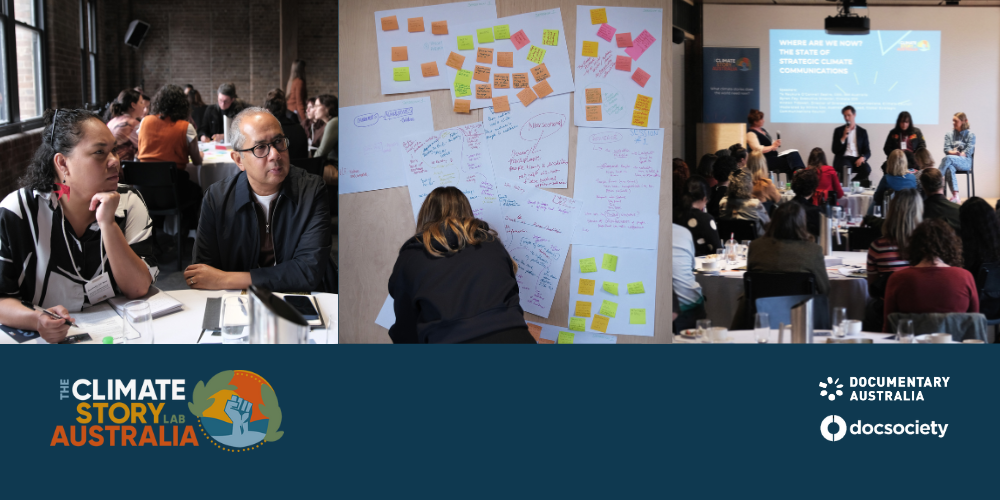
Over three days, we brought together a truly remarkable group of documentary makers, climate experts, First Nations leaders, impact and communications strategists, political consultants, community organisers, advocates and philanthropists to workshop strategic climate storytelling.
*
We had two main goals: firstly, to strengthen current climate documentary films, series and podcasts in varying stages from development to pre-release, and their impact campaigns. Secondly, to workshop the strategic priorities for the next generation of climate stories to ensure that documentaries are movement-aligned, grounded in lived experience, and informed by the latest research into audience attitudes, beliefs and behaviours around the climate emergency.
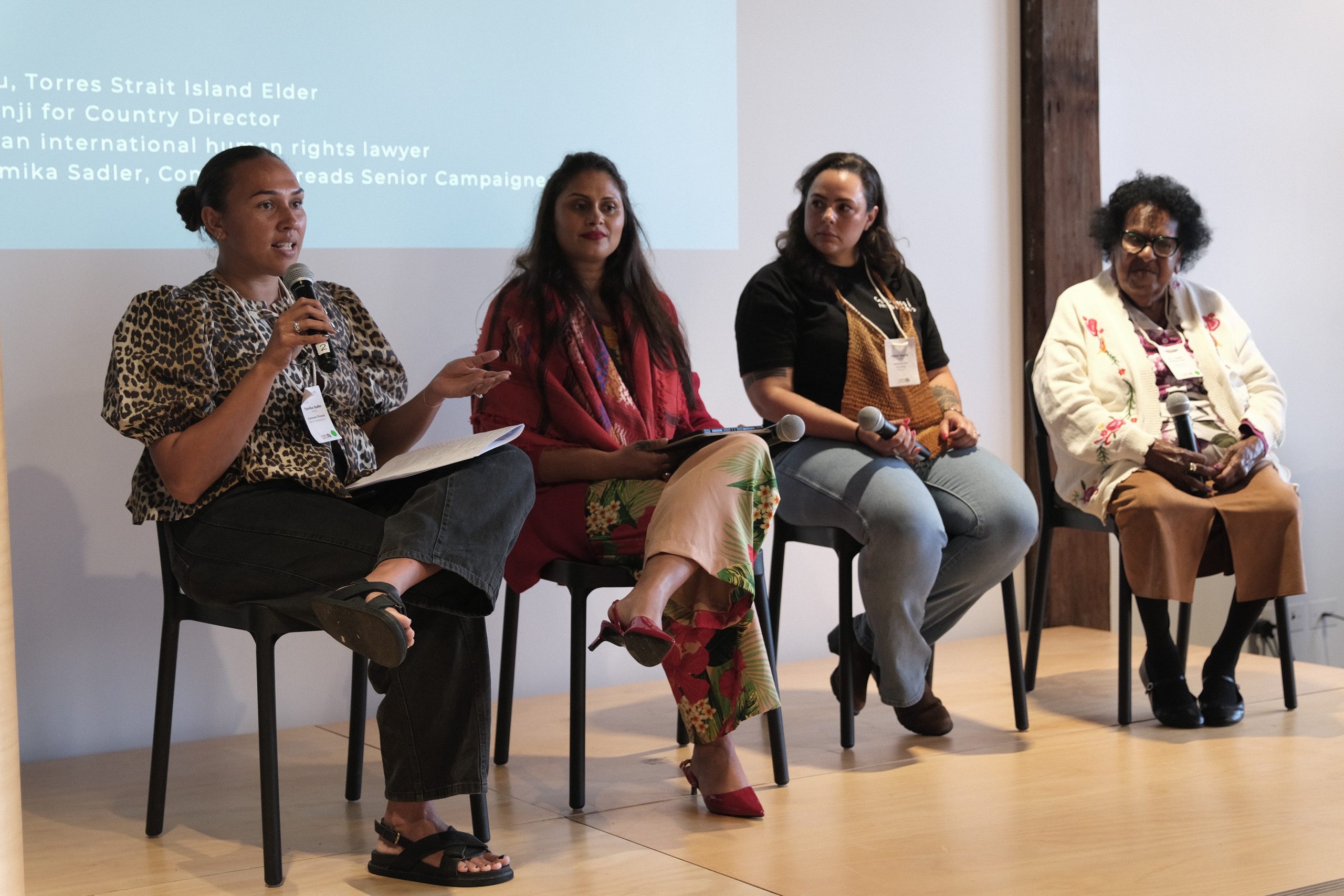
We kicked off with a plenary panel discussion grounding the lab in climate justice, moderated by Tamika Sadler from Common Threads. We were honoured to be joined by Aunty McRose Elu, Torres Strait Island Elder from the Australian Climate Case, Rikki Dank from Gudanji for Country and international human rights lawyer Kavita Naidu. We listened to beautiful and heartbreaking stories for Country and community, and learned the importance of a justice-centred approach to climate campaigning and solutions. The message was loud and clear: there is no climate justice without First Nations justice.
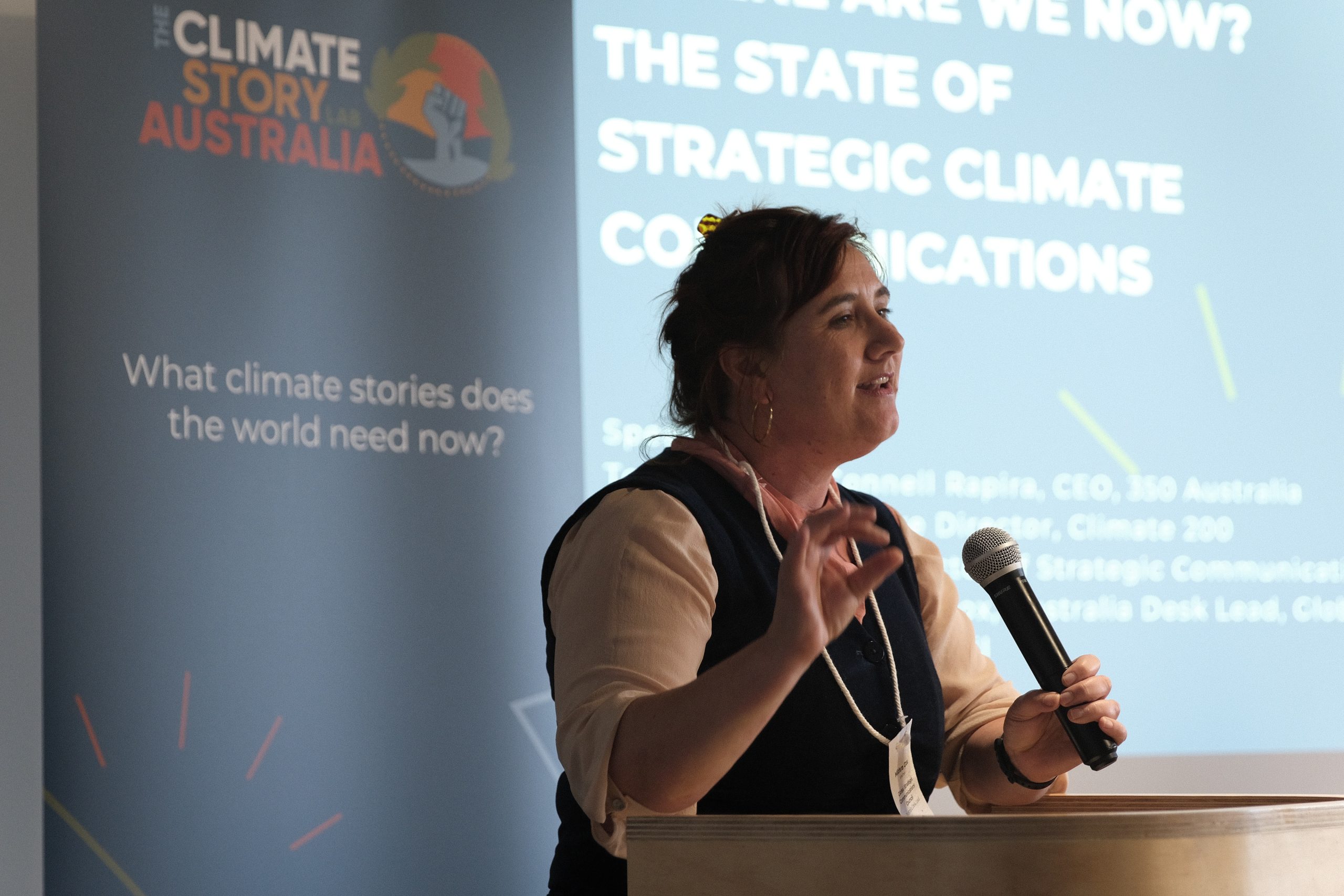
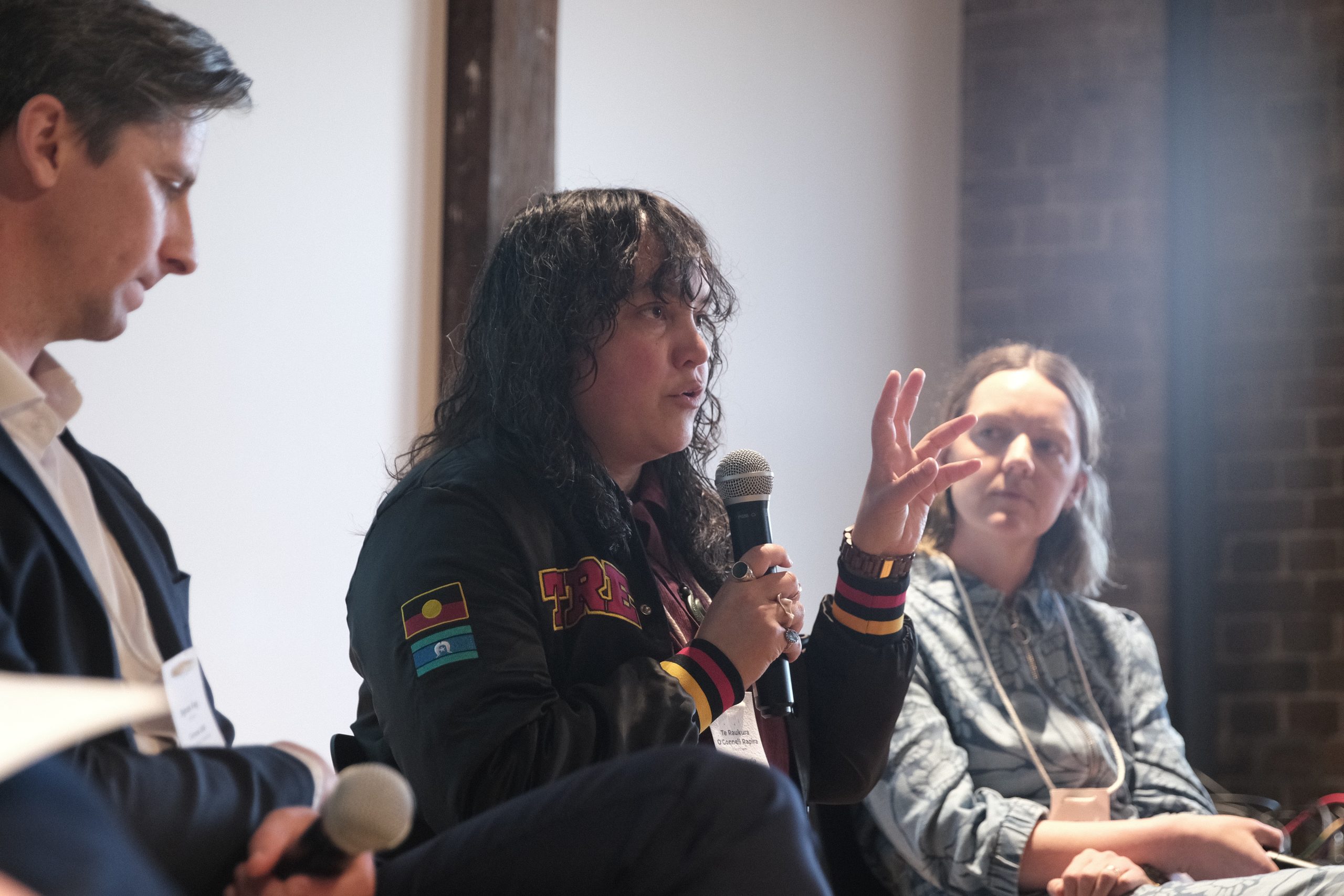
Mithra Cox from Global Strategic Communications Council moderated a fascinating discussion on the state of strategic climate communications with Byron Fay from Climate 200, Te Raukura O’Connell Rapira from 350 Australia and Kirsten Tidswell from the Climate Council. This included an analysis of the political landscape on climate following the federal election and the narrative challenges facing the climate movement, the latest audience insights on everything from nuclear, to gas, to the government’s track record on climate action, a critique of hero/villain and other story tropes, and the priorities for First Nations-centred narrative strategies.
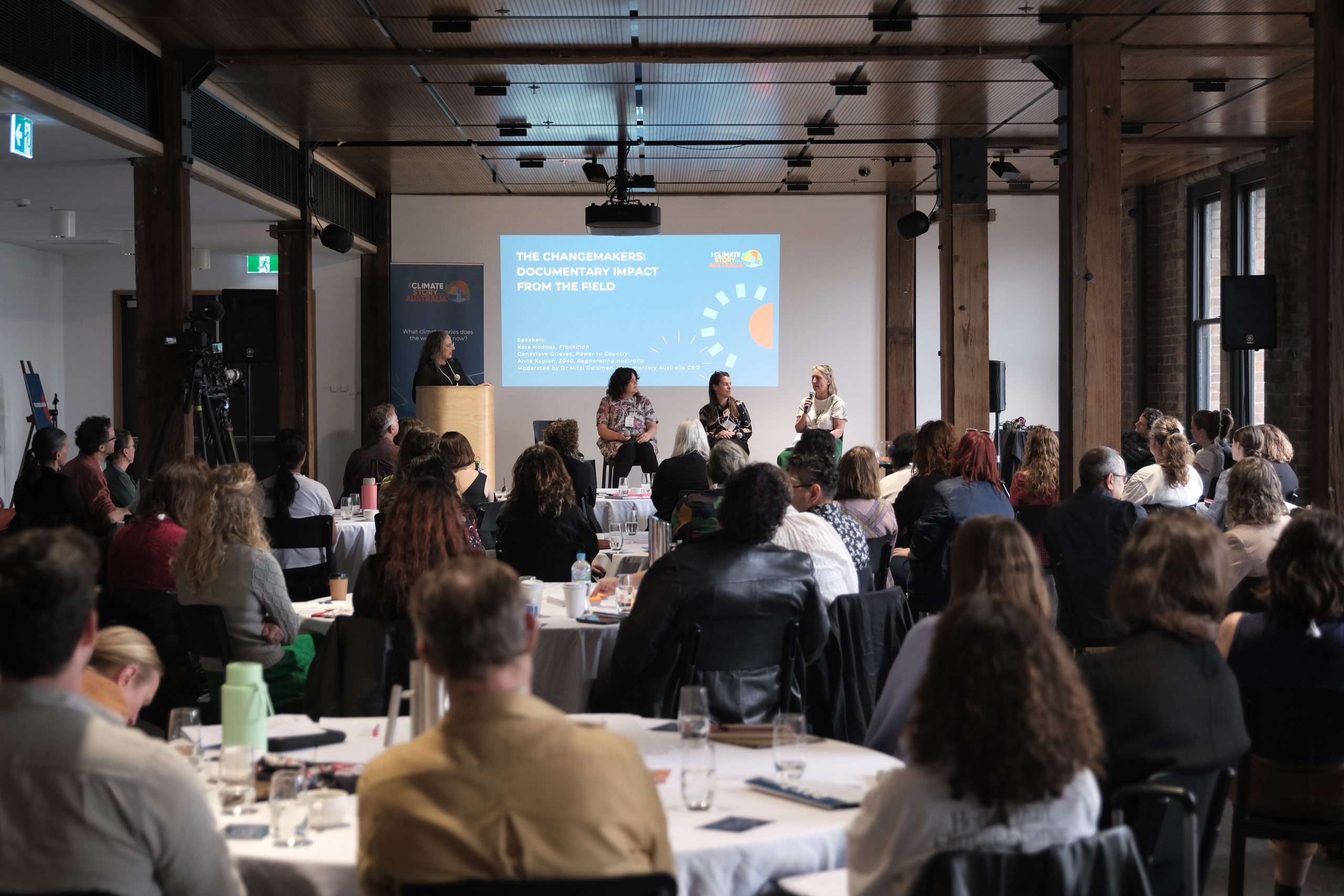
Hollie and I had the pleasure of presenting on storytelling and impact – how social, environmental and documentary sectors can partner to leverage independent storytelling and distribution for change. Following this, our CEO Dr Mitzi Goldman moderated a panel with some of this country’s best impact documentarians sharing case studies from the field, including Anna Kaplan (2040, Regenerating Australia), Genevieve Grieves (Power to Country) and Kate Hodges (Frackman). Doc Society’s international case study videos of The Territory and Offshore also really expanded everyone’s understanding of what’s possible and set the bar for what was to come.
I knew that our amazing guest speakers would blow everyone away, but I couldn’t have anticipated the extent to which they would re-shape our modes of thinking, making, doing.
*
The seven documentaries presenting in our ‘pitch-in’ sessions on day two were equally impressive – we had filmmakers Jordan Giusti and Rachel Forbes presenting feature documentary Floodland, producers Laurrie Mansfield and Kate Montague presenting documentary podcast Connected to Country, the filmmakers behind embargoed feature documentary Confidential Gas Project (working title), film team Maya Newell and Aunty McRose Elu presenting feature documentary Testimony, director Kellie Riordan presenting documentary podcast The Electric Postcode, director and producer Yale MacGillivray presenting feature documentary Moblands, and filmmakers Karla Hart and Renée Kennedy presenting documentary series Saltwater Cowboys of Shark Bay.
The presentations were polished and compelling – I was proud to see the climate movement captivated by the calibre of our creatives, their productions and their audience strategies.
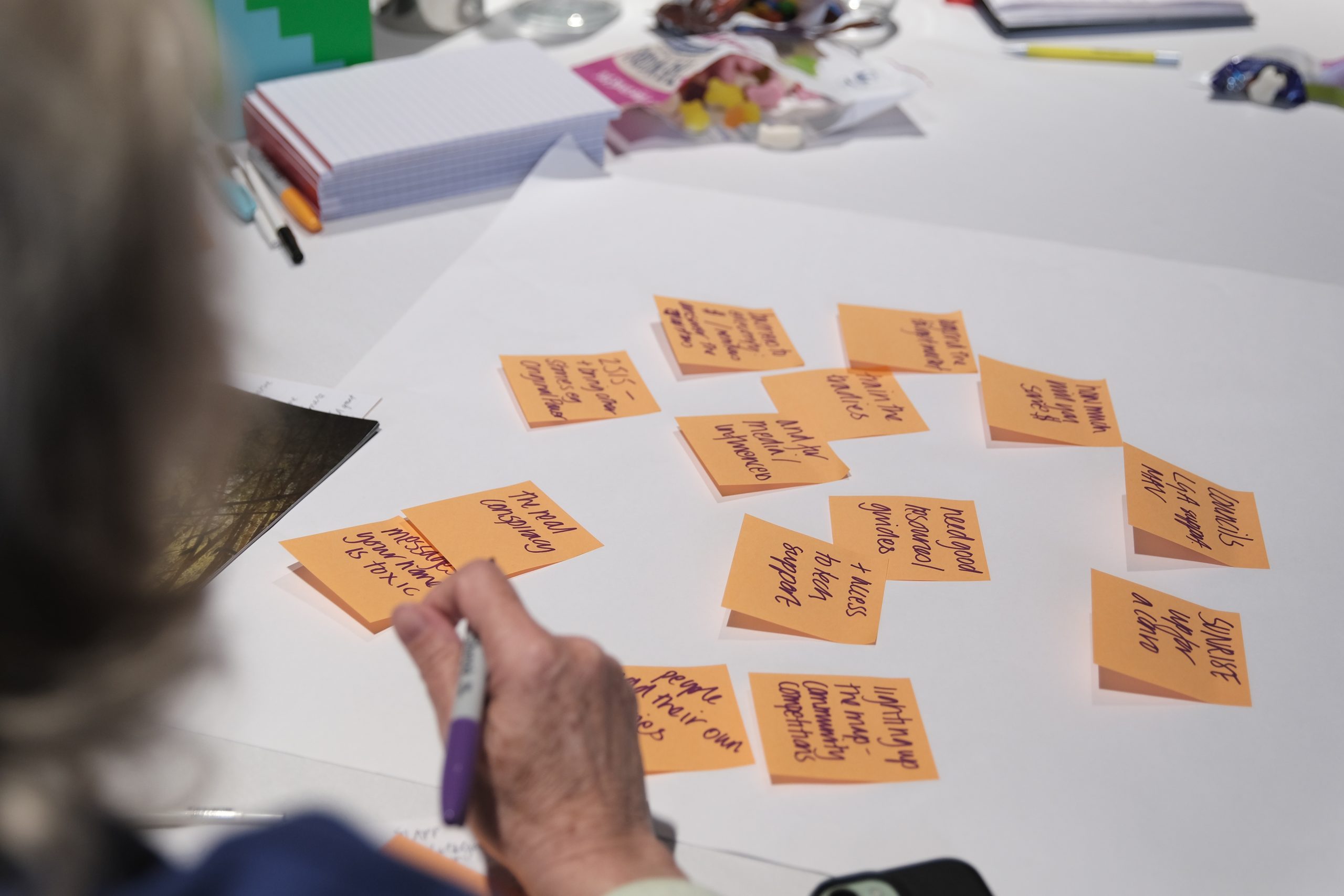
We knew that we had curated a very special roomful of people, but what we couldn’t have anticipated was how seriously our 100 roundtable participants would take the directive to pitch in! I’m gobsmacked by the enthusiasm and generosity of those in the room. In total, we saw more than 100 pledges of financial and in-kind support across the seven documentary projects and their impact campaigns – including a Shark Island Foundation outreach grant, free impact consultations with Regen Studios, a Blue Zone badge to COP30, and introductions to UN special rapporteurs and COP31 programming teams.
Experts in media and entertainment law, whistleblower protections and strategic lawsuits against public participation (SLAPPs) offered pro-bono legal advice, while key philanthropists offered to introduce the projects to major environmental giving networks.
Climate experts pledged to provide rough cut feedback and to collaborate on developing impact and education resources; academics pledged to include documentaries in teaching curricula and offered to connect the documentaries with research projects; and a number of major climate organisations and member networks pledged to support documentary pathways to audiences, by distributing documentary release information to significant databases, using documentaries as tools in their campaigns, and hosting screenings or podcast listening parties.
The documentary teams also walked away with 10 roundtables’ worth of butchers paper dreaming, doodling and scheming packed with ideas for partnerships, audience engagement and political strategy that will help set the course for each project’s impact campaign. Honestly, wow.
*
Our third day was reserved for our Imaginarium. We kicked off with some surprise special guests to help us think outside the box – hilarious, uncanny and whip-smart actors Contessa Treffone and Charles Wu, who brought us an extract from playwright David Finnigan’s very on-point play, Scenes from the Climate Era, followed by a Q&A sharing their reflections on the power of theatre and the arts to engage audiences with ideas and feelings around the climate crisis. Special thanks to David and Belvoir St Theatre for helping us to make this happen.
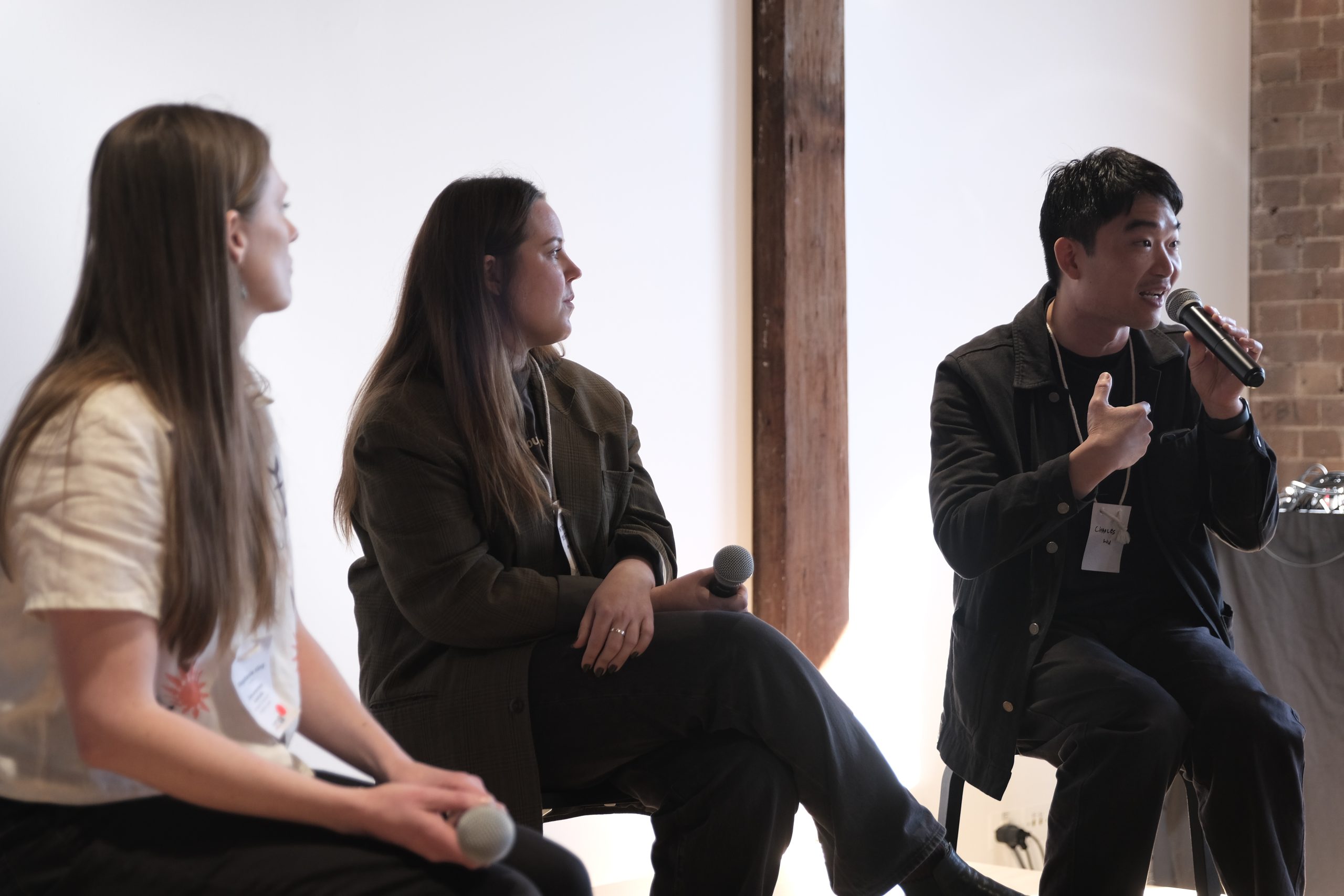
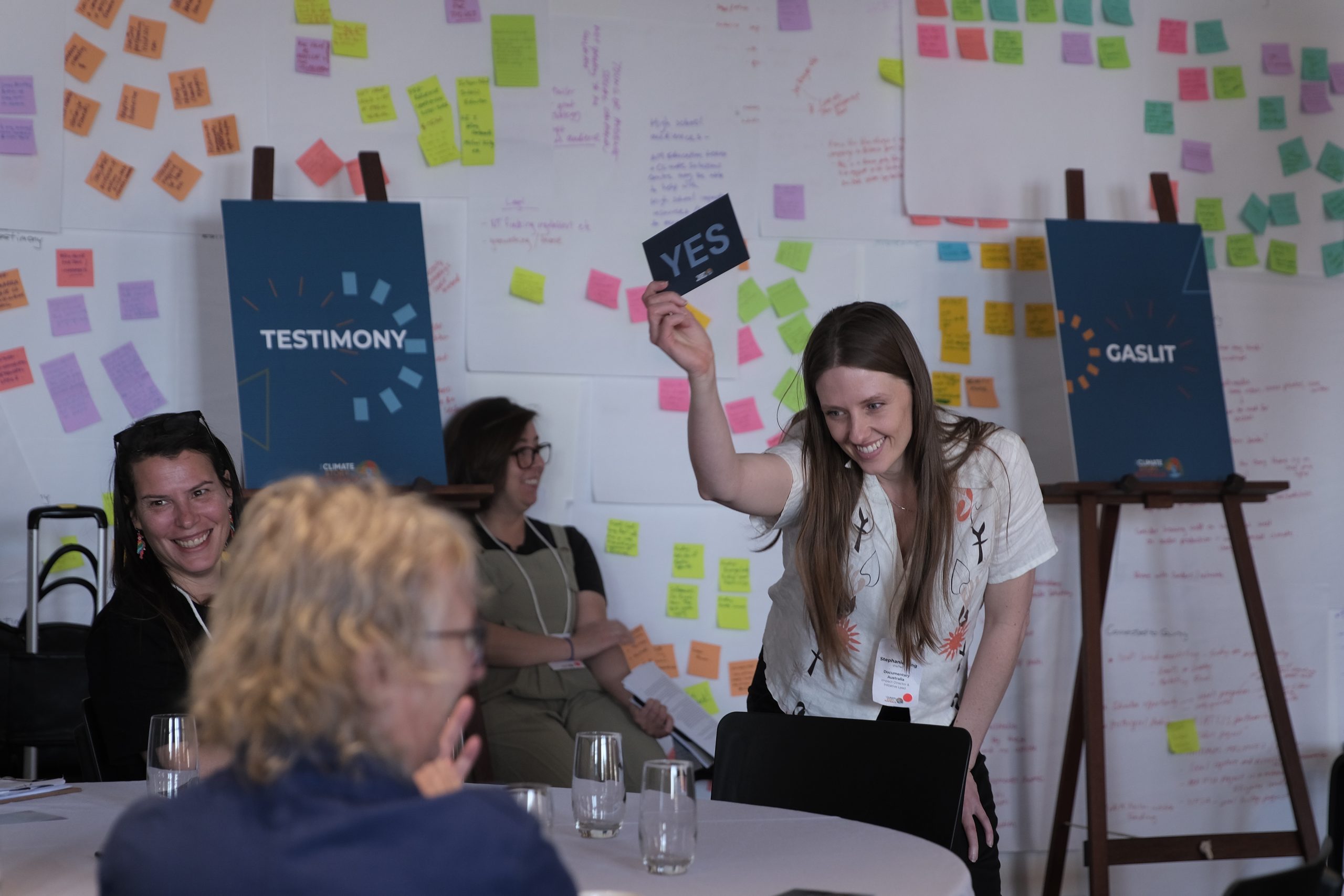
We then dove into three much-anticipated workshops to address the lab’s central questions:
-
- What climate stories does the world need now from this region, and from whose voices?
- Which audiences need to be reached, with which stories, and how?
- And, what are the innovations, collaborations and systems changes needed to support this?
We have come away with an abundance of ideas and recommendations from these workshops, that we look forward to sharing in the coming months through a detailed report. One early, tangible outcome is that a major climate organisation pledged to convene a new working group for documentary storytellers and the climate movement, to ensure we carry this important interdisciplinary work forward.
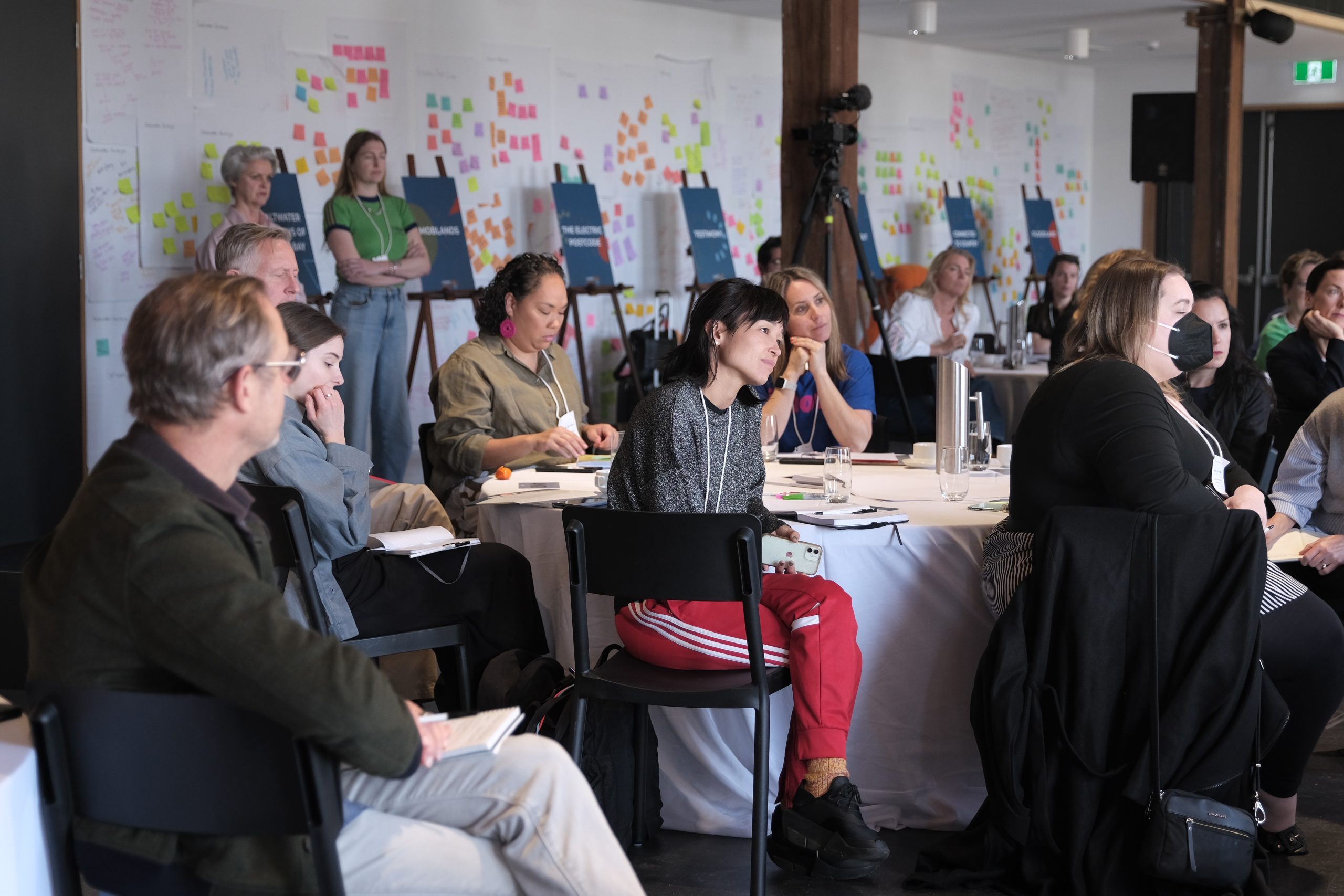
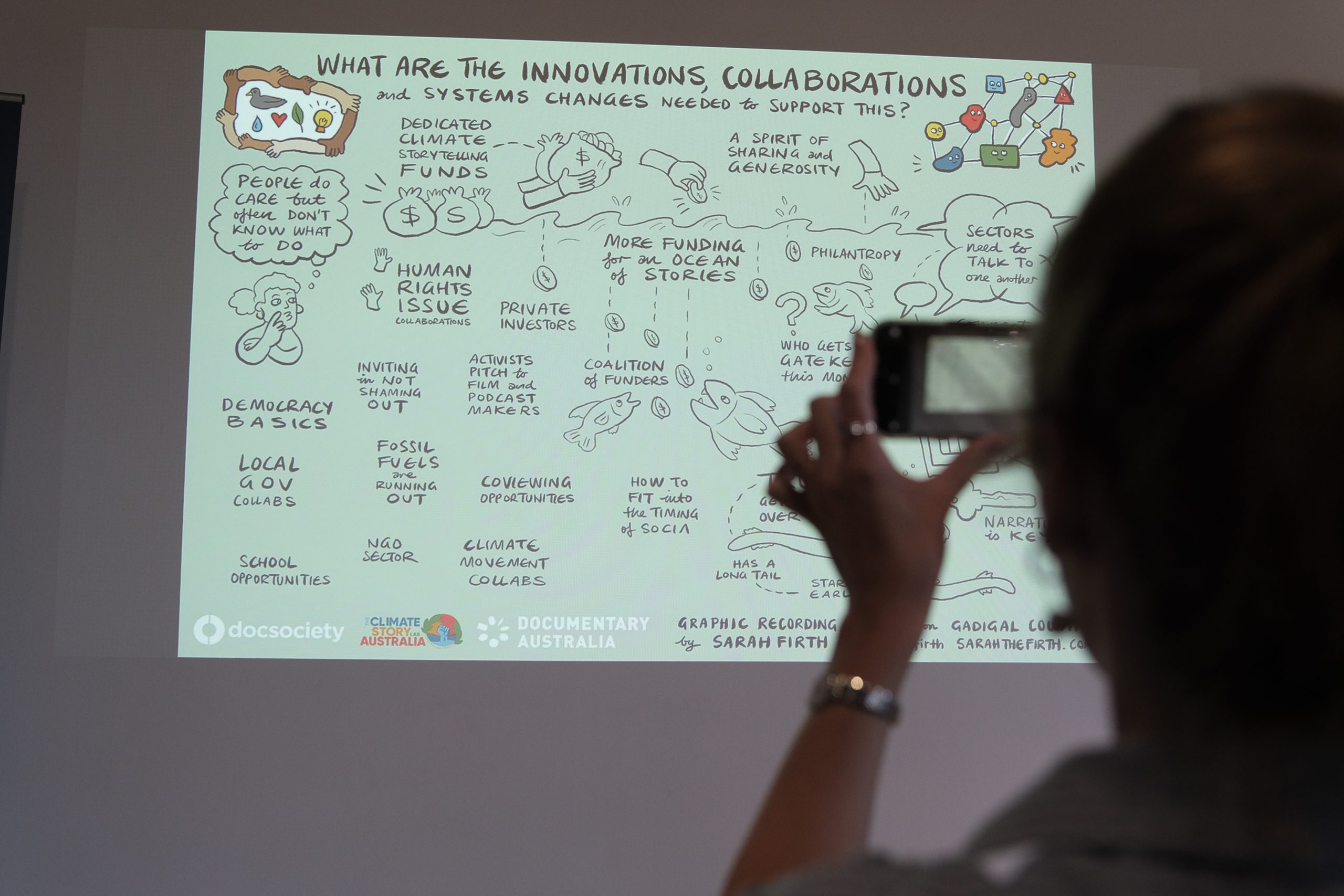
*
I’m honestly so blown away by what happened in that beautiful sunlit room overlooking the water over three precious days. While we did our best to create an inspiring and engaging program, it was ultimately the mix of impressive people in the room, the energy and willingness everyone brought to actively participate in the workshops, the group’s ability to hold space for diverse perspectives, and the generosity of spirit that made the three days a transformative experience. A kind of alchemy.
A huge part of this was down to our wonderful MCs, Tishiko King and Yael Stone, who from the very first seconds of the lab established an environment of cheekiness and play, of curiosity, listening, collaboration and care. Thank you for being our glue, our mischief-makers, our guides.
Thank you also to our incredible Documentary Australia team who worked tirelessly behind the scenes to make this a seamless event – particularly Lisa S, Barbara, Julia, Em, Mitzi, Sharlene, Cealan, Lisa K, Jess, Matisse, Lucy and James. Thank you to our generous supporters at Shark Island Foundation, Screen Australia, Screen NSW, Screen Queensland and Screenwest – we could not have done this without you. And thank you to our collaborators and the brains behind this brilliant international initiative, Doc Society.
The risk of writing a reflection like this is that you compress something special into a list of bullet points. It’s harder to capture the profound moments in-between.
How can you describe the shared joy of the room erupting into a spontaneous dance party to Yothu Yindi’s Treaty? How can you describe the deep, knowing belly laughs when two actors bring into sharp relief the absurdity of the rules of climate communication? How can you describe the sound of deep listening to Aunty McRose and Rikki’s stories of colonisation and Country?
We’ve been told that not all climate summits are like this, which has been lovely feedback to hear. I’d contend that this is because it wasn’t a climate summit; it was a story lab. Perhaps it’s a reminder of our hunger to connect and to collaborate deeply, across sectors. Of what’s possible when we place culture and the arts at the centre of wicked problems. Of the power of storytelling to convene conversations and catalyse change.