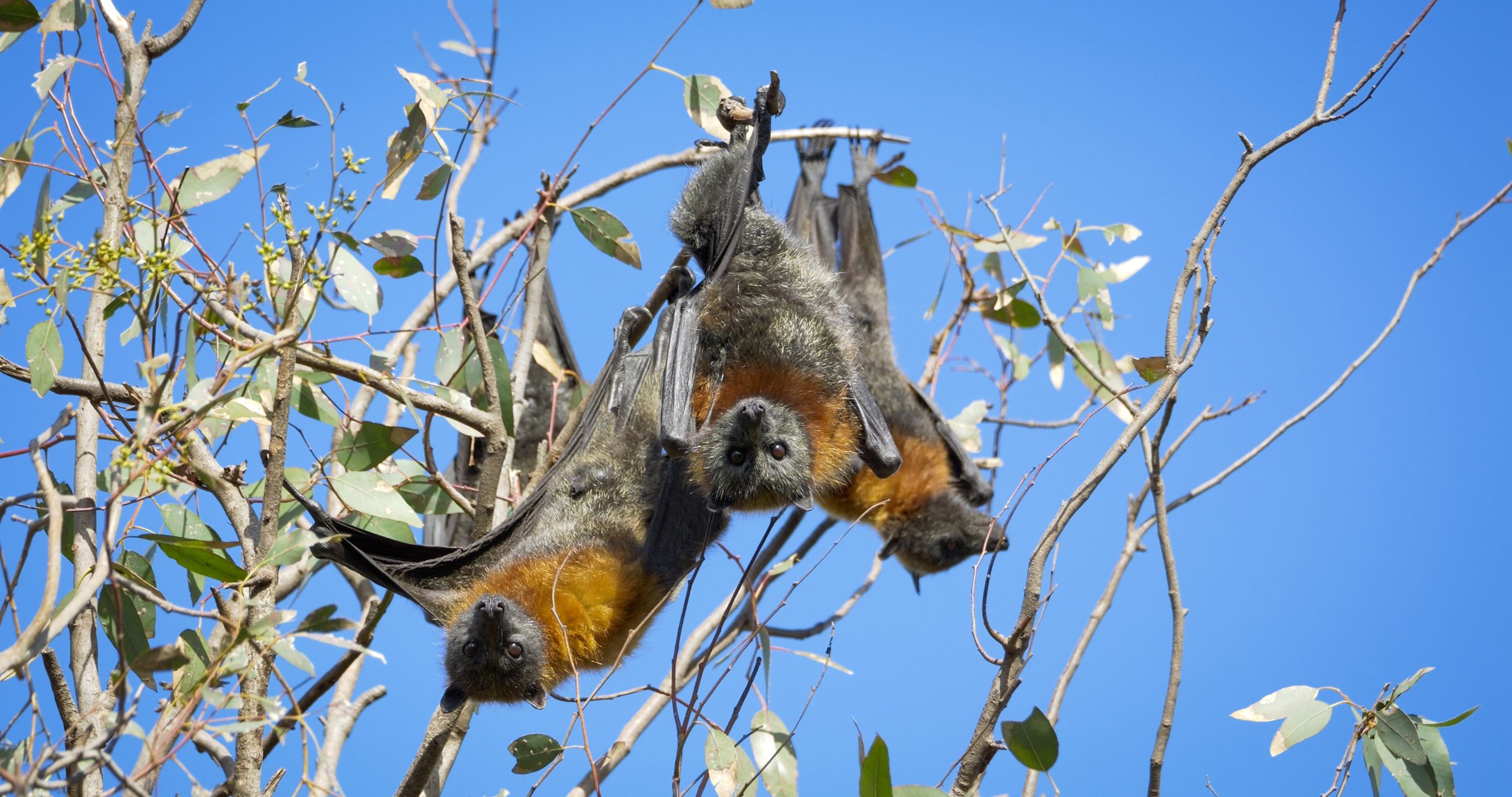
For many Melbourne residents, it’s a familiar sight: the dusk sky dotted with Grey-headed flying-foxes bound for fruiting trees and flowering eucalypts. Far less understood is where they come from, their vital role as pollinators, and the various pressures they face in the city, from hazardous infrastructure to catastrophic heatwaves. Enduring stigmas and misconceptions commonly frame the species as a disease-carrying pest, and they are regularly dispersed from gardens and private properties despite being federally protected and threatened with extinction.
How can we better coexist with a species that entire forests depend on, and what does our failure to do so say about us?
Grey Area explores this question through the story of a nationally significant Grey-headed flying-fox colony in the heart of Melbourne, and the work of those striving to protect it. In a bushland park bordered by the M3, with a population reaching up to 50,000 in summer, the colony is a remarkable force of nature in a tenuous setting that requires constant care. As fragile as it is striking, the colony offers a compelling case study of how the needs of vulnerable wildlife are weighed against competing social and management priorities. With urban expansion and climate change driving more human-wildlife conflict, the story of this colony reflects a growing global challenge. Grey Area asks us to reframe our relationship with urban wildlife and find ways to share our cities with the other species that call them home.