
PUBLISHED29 Sep 2026
First Nations Women’s Voices: Stories of matriarchy for systems change
Common Ground CEO Gemma Pol, moderator of the First Nations Women's Voices panel, reflects on the discussion
 When it comes to systems change, First Nations women’s voices are often at the heart of the work, yet they are rarely centred by others. From the Cummeragunja Walk-Off to caring for Country through fire, women have always played a vital role in building and sustaining movements for change, and in holding our communities together, often against all odds.
That’s why when Documentary Australia asked me to moderate a First Nations panel as part of their Women’s Voices initiative, I was eager and honoured to say yes. And when they asked me to write this reflection piece, I said yes again and knew that the article itself had to centre these women’s voices.
At Common Ground, our strategy is all about strengthening the storytelling ecosystem and our place in it, so that we can collectively and intergenerationally change the systems that dominate our lives – from education to media, legal to healthcare – shifting them towards First Nations ways and values so they work better for everyone who now calls this place home.
To understand what this looks like in practice, you only have to look at the powerhouses who joined me for this yarn.
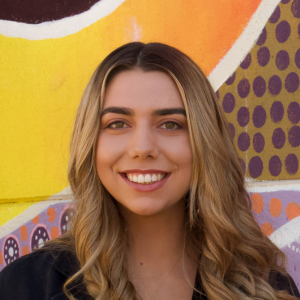
AUNTY JUNE OSCAR AO
A proud Bunuba woman from the remote town of Fitzroy Crossing in Western Australia’s Kimberley region, former Aboriginal and Torres Strait Islander Social Justice Commissioner, and founder of Wiyi Yani U Thangani Institute, Aunty June Oscar has spent decades demonstrating what First Nations gender justice can look like.
Aunty June reminded us that we come from the oldest continuing cultures on Earth, where storytelling has been the driving force that has sustained our continuation. For First Nations people, storytelling is not a new skill learned from others, but an innate practice used to learn, hold and transmit knowledge across generations.
Aunty June also spoke about the practical and often invisible work of peacebuilding that women do every day, and the importance of creating spaces for First Nations women and gender-diverse people to come together and dream for our futures. The Institute’s recent peacebuilding work has brought over 60+ women, girls, Sistergirls and trans women together for two camps on Bunuba Country to explore how matriarchal strength, intergenerational knowledge and connection to Country can provide the foundations for new approaches to systems change.
“Our work at Wiyi Yani U Thangani is about making our stories visible and heard so we can change systems. And we call this peacebuilding. We call it peacebuilding because the ways our women have always been in the world is about holding and applying the knowledges of care, sustaining Country and kin.” – Aunty June Oscar
When speaking about the Institute’s current film project in partnership with Create Justice, Aunty June highlighted the power of creating a record of our own stories, our own ways – something that resonates deeply with our work at Common Ground. When First Nations people speak directly about our lives and communities, those stories become evidence and tools for changing policy, practice and public understanding.
Learn more about the Wiyi Yani U Thangani call for systems change.
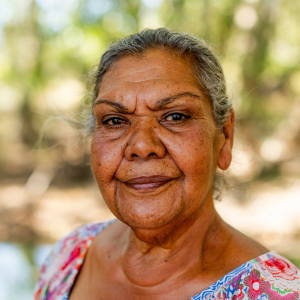
RACHEL PERKINS
An Arrernte and Kalkadoon woman and one of the nation’s most renowned screen practitioners, Rachel Perkins is a co-founder of Blackfella Films, Director of First Nations Strategy at Screen Australia and a major force in building the First Nations screen sector.
Rachel also yarned about First Nations deep-time oral storytelling practices, and how they continue through filmmaking (and other mediums) today. When our people finally had access to resources, she explained, we took to filmmaking so well because we come from a history of great orators and storytellers.
Rachel’s own work and family lineage are evidence of that. Rachel wrote, directed, produced and presented the three-part series The Australian Wars, and spoke about how healing historical documentary filmmaking can be. She said when historical truths – especially where justice was never served and no reparations made – are brought to light and shared on our terms, it helps lift the burden of resentment we often carry in our bodies and communities. Knowing the truth, and having truth be known, is healing.
“Indigenous filmmakers, in a lot of ways, are doing the grunt work that was left out by the education system over so many decades… It feels like we’re trying to put back things that weren’t there for non-Indigenous people and Indigenous people when they were growing up and learning, and in their mainstream education that they might not have understood.” – Rachel Perkins
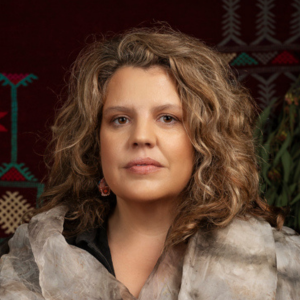
GENEVIEVE GRIEVES
Genevieve Grieves is a proud Worimi woman and respected artist, educator, field builder, film director and oral historian, as well as a co-founder of both GARUWA and Shifting Ground.
Echoing Rachel’s yarn, Genevieve also spoke about truth-telling and how it isn’t just healing for our communities, but for everyone who lives in this place. She also shared the story of her first documentary Lani’s Story, and the power of people having their stories told for the first time with deep care and love.
“Centring care as a way of connecting, as we do as First Nations women – that’s really what everyone needs to do… Our knowledges and our ways of being, doing, knowing can be foundational for this whole country.” – Genevieve Grieves
Lani hadn’t been heard by so many different systems – by the police, by the justice system and everything that was supposed to protect her. The film became a vehicle for deep transformational change not only for Lani, but also in how we think about and respond to violence in our communities.
It was a particularly brave story to tell because it was released during the Northern Territory Intervention – a time when Aboriginal men were being vilified and framed as violent. As Dr Amy McQuire details in Black Witness, the Intervention was fuelled by a moral panic manufactured to ultimately advance political agendas against land rights, while ignoring most of the actual recommendations in the Little Children are Sacred report.
In this climate, holding Lani’s story required a thoughtful and unwavering First Nations lens like Genevieve’s – one that could both hold the complexity, while keeping Lani’s voice firmly at the centre. And that’s the power of documentary, too. Genevieve reflected on the film’s premiere at the Sydney Opera House, when the audience shared a moment of complete silence before joining in a standing ovation.
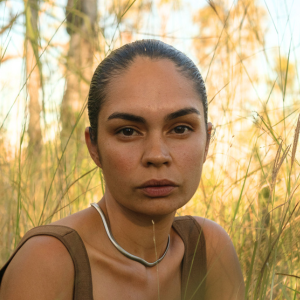
MARLIKKA PERDRISAT
Marlikka Perdrisat is a Nyikina Warrwa and Wangkumara Barkindji filmmaker and legal academic, who also spoke about an important intersection raised by Aunty June: the relationship between storytelling, Country and Law.
Marlikka began filmmaking during the pandemic with her series Concepts of Country. This series features four one-minute videos, each exploring a unique yet interconnected element of Nyikina legal framework and knowledge system, such as Jadiny (totem). At Common Ground, we were privileged to license these incredible films, which have since been brought into university law school curricula and drawn on extensively across the country – demonstrating how western legal systems are finally beginning to recognise the legitimacy of First Law, even as it operates differently and is deeply linked to Country and place.
Since teaching herself how to edit through her first series, Marlikka now writes, directs, produces and edits all her projects so she can ensure the meaning and vision she has is held strong, and she can remain responsive to community aspirations.
“Every movie or project I’ve worked on now, I have directed, written, produced, edited, because I can just see what I want it to be. And I think that when you hand over some of it, it loses the meaning, especially if they’re not Indigenous, or they’re not the gender you’re discussing, or they haven’t had an experience with the issue.” – Marlikka Perdrisat
Marlikka also spoke to the deep trust felt when a community approaches you to tell their story, and the intimacy that these relationships can build. Throughout her work, Marlikka has continued to align her storytelling and filmmaking to community aspirations, rather than imposing her own, which can be deeply felt across her body of work, including Ornmol, which screened at Berlinale.
MATRIARCHAL ECOSYSTEM IN FILM
What became overwhelmingly clear throughout our yarn was the staunch presence and generosity of First Nations matriarchs in the film ecosystem, and that our storytelling never happens in isolation.
Rachel shared how she was mentored under the vision of Freda Glynn, the legendary founder of the Central Australian Aboriginal Media Association (CAAMA), who instilled in Rachel (and many others) the need to build and create media that can be vehicles for mob to share our stories and cultures. In a beautiful, full-circle moment, Freda’s granddaughter, Rona Glynn-McDonald, is our founding Chair at Common Ground – another space for First Nations creativity and storytelling to shape the systems and narratives that impact all our lives.
The legacy and ecosystem of First Nations matriarchy in film and beyond continues to grow and get stronger. Whether it be through peacebuilding, historical truth-telling, community-led filmmaking or a combination of all these things, these incredible women show us that storytelling is not separate from systems change – it is its most critical ingredient.
Gemma Pol is a Wiradyuri, Ngemba and Paakantji woman who grew up in a small coastal town on Worimi Country. Her mob are the Beetsons and the Higgins. She is the CEO of Common Ground First Nations and a non-executive director at Firesticks – working across storytelling and systems change to build movements that protect people and Country.
With a background in communications, Gemma specialises in strategic storytelling for social impact and systemic change. She sees storytelling as a powerful tool to build collective understanding, shift structures and strengthen cultures – now and for future generations.
At Common Ground, she works with a team committed to creating space for First Nations storytellers to share their stories, their ways. Through digital storytelling, learning resources, capacity building programs and place-based story recording projects, Common Ground works to ensure First Nations knowledges are protected, cultures are celebrated, and truth-telling is centred in national conversations.
WATCH THE RECORDING
This event was presented as part of Documentary Australia’s Women’s Voices initiative, which elevates stories from women, girls and gender-diverse people that shift the narrative and drive progress for gender equality and justice.